When the migration crisis began in August 2021, that month alone saw eight times as many people attempting to cross the border unlawfully compared to the entire year of 2020.
Numerous people continue to attempt border crossings daily.
Tusk announced he would present a new migration policy at a government assembly on October 15.
“One component of the migration strategy will include a temporary regional suspension of the right to asylum,” the prime minister stated.
“I will demand this; I will demand recognition in Europe for this decision,” he further added.
Under international law, nations are required to allow individuals the right to request asylum. Tusk did not specify how he would justify this move to his European Union partners.
“We are fully aware of how it is exploited by Lukashenko, Putin… by human smugglers, traffickers, and how this right to asylum is used exactly against the essence of the right to asylum,” he noted.
“Poland must take back 100% control over who enters Poland,” he declared.
Many of the migrants who enter the country from Belarus do not stay; instead, they move on to Germany. This has led Berlin to implement security checks on its borders with Poland.
Tusk’s pro-EU coalition surprised many by maintaining a hard-line migration policy implemented by the preceding right-wing Law and Justice government, which approved pushbacks and constructed a 5.5-meter-tall steel fence along 186 km (115 miles) of its border with Belarus.
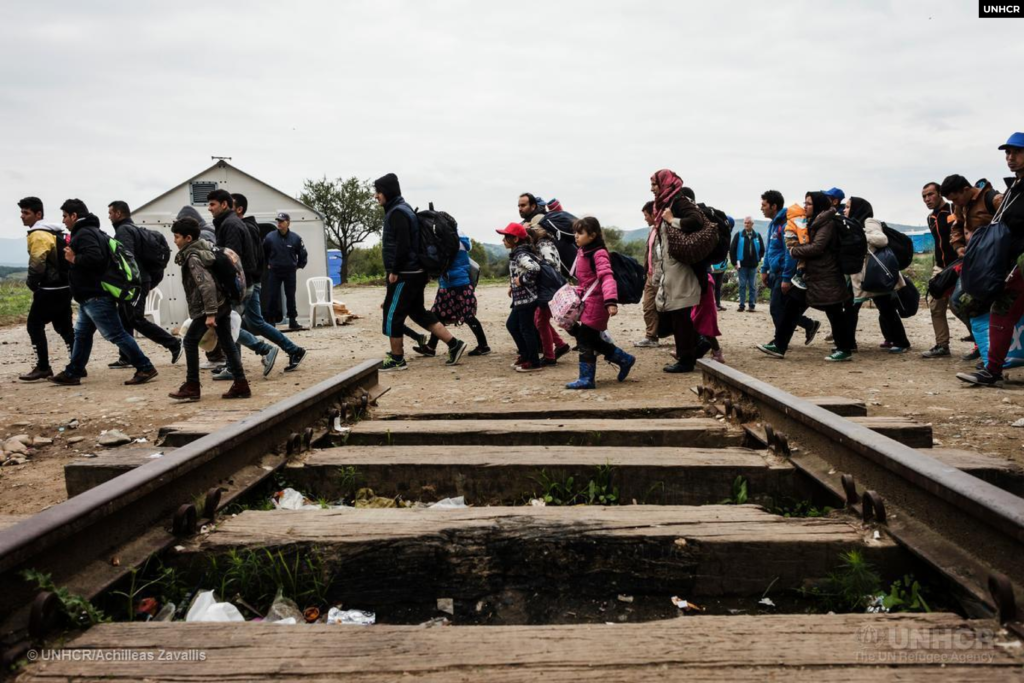
While it talked tough on migrants from the Middle East and Asia, the Law and Justice-led government issued the largest number of annual residence and work permits in the entire EU for much of its time in office.
Tusk’s coalition has continued with the policy of pushbacks and reinstated a restricted zone along parts of the border. In July, after the death of a 21-year-old soldier who was stabbed by migrants near the border, the government pushed through parliament legislation decriminalizing the use of firearms by security forces in self-defense under certain conditions.
Opinion surveys indicate that a significant portion of the public supports the hard-line approach, with 86% of respondents supporting the use of weapons by security personnel in self-defense.
Indeed, Foreign Minister Radoslaw Sikorski emphasized that the Civic Coalition’s strict stance on migration was crucial to its electoral success in October of last year.
“I doubt we would have won if we hadn’t outflanked the then ruling party on the right on migration, if we hadn’t convinced the electorate that we will be as tough on physically protecting the Polish border as the previous government was, so we neutralized this issue,” Sikorski stated during a speech at the Johns Hopkins School of Advanced International Studies in Washington in September.
However, human rights groups have raised alarms over the new government’s migration approach.
NGOs estimate that more than 130 migrants have lost their lives on both sides of Belarus’ borders with Poland, Lithuania, and Latvia since the crisis began.